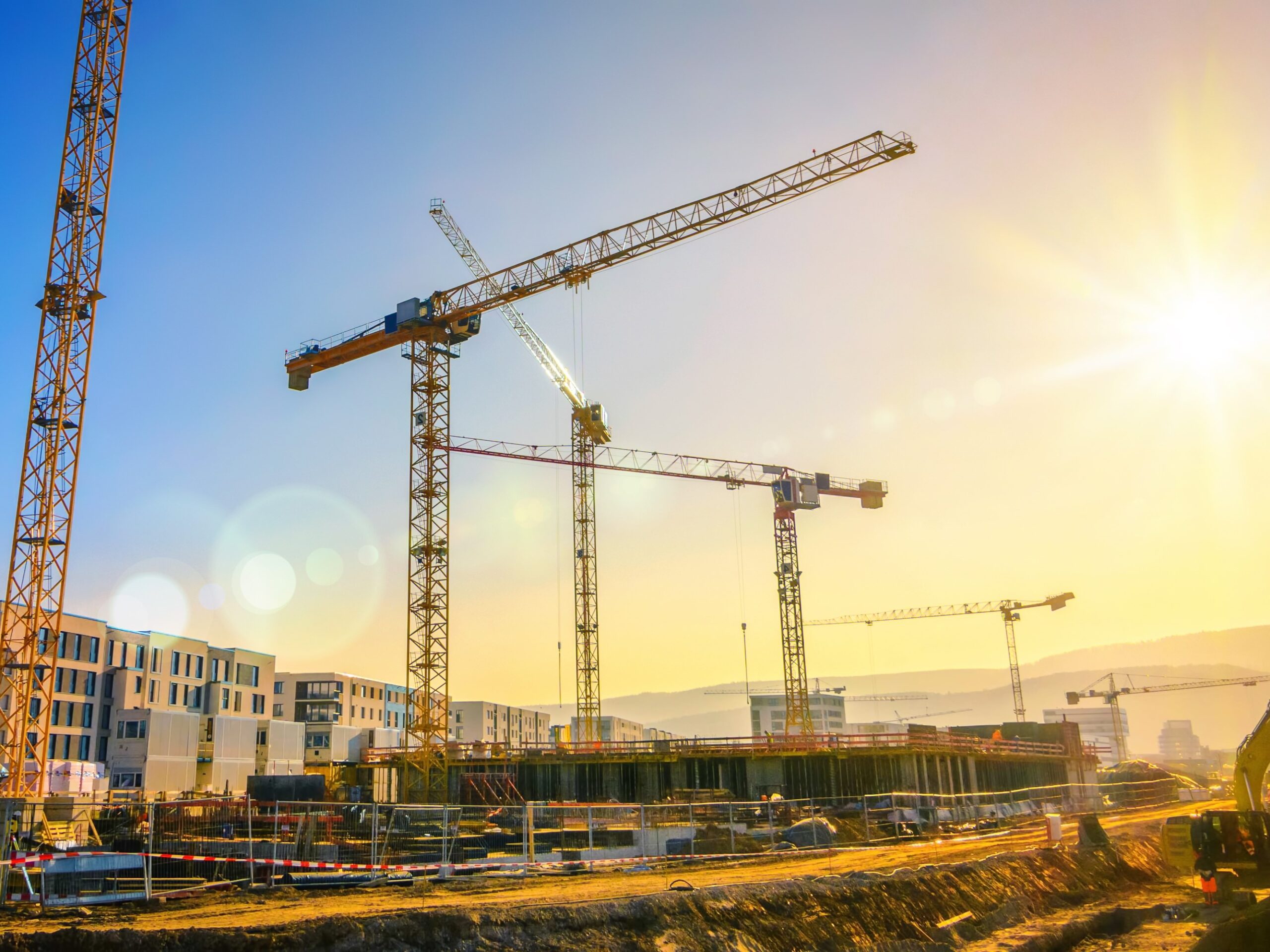
Construction doesn’t have a data shortage. Every project generates thousands of records showing what was specified, bought, delivered, installed, paid for and removed.
Specifications tell us what should be used. Purchase orders tell us what was bought. Delivery notes record what arrived. Invoices tell us what we’re paying for. And models show us what we intended to build.
Yet teams still discover materials that don’t match the specification, quantities that don’t reconcile, missing certifications or products that have already been installed incorrectly. Too often, these problems are discovered weeks or months after they would have been easiest — and cheapest — to resolve.
The industry’s next data challenge isn’t collecting more information. It’s connecting the information we already have to decisions while there is still time to act.
Digitising information doesn’t make it actionable
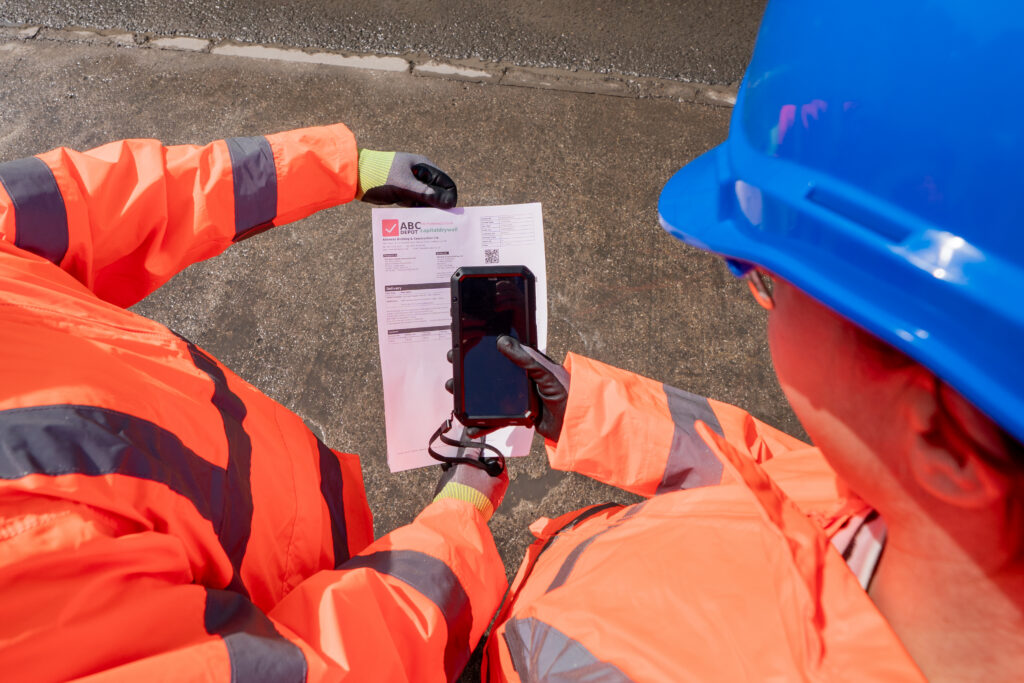
Construction has made huge progress in moving information from paper into digital systems. But a digital record isn’t automatically useful data. Take a delivery note. Storing it as a PDF makes it easier to retrieve, but what if the product recorded on it doesn’t match the specification?
Unless that information is identified, structured and compared against what was expected, we’ve digitised the document without changing the outcome. The real value of construction data isn’t simply that we can store it. Its value comes from what we’re able to know, decide or prevent because we have it.
The real cost comes from finding out too late
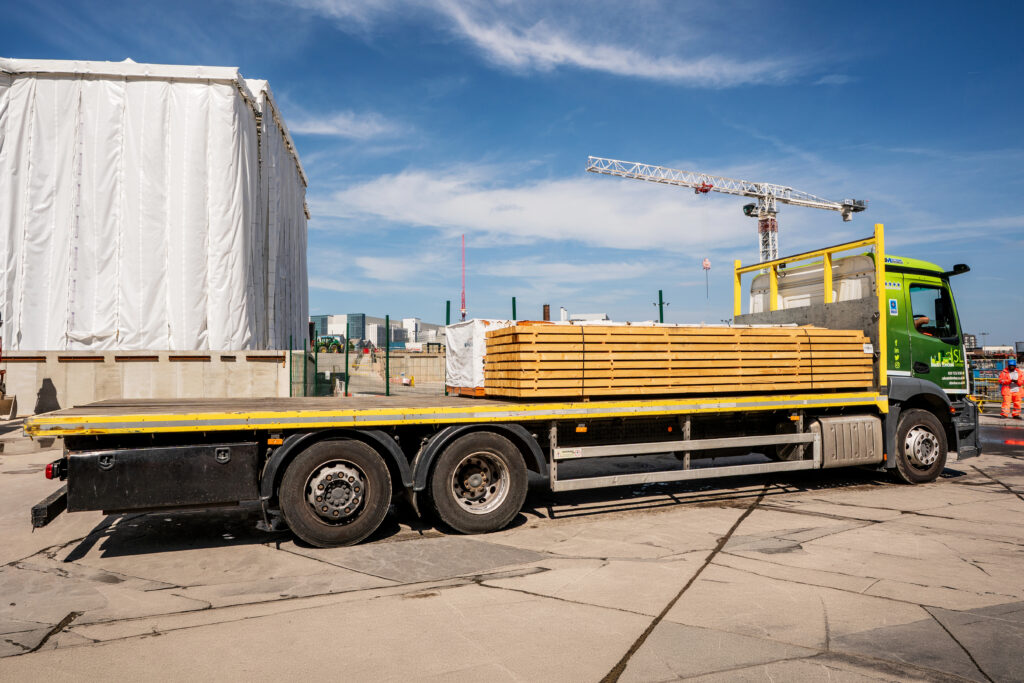
Consider something as ordinary as an insulation delivery. Twice the quantity required arrives on site. It’s accepted, craned onto the roof and work continues. Eventually, someone realises there’s too much. At the point of delivery, the discrepancy may have been straightforward to resolve. Later, it could mean another crane, another road closure, rescheduled labour and the additional cost of moving or returning materials.
A small discrepancy has become a significant commercial problem.
The same principle applies to quality. A material that doesn’t meet the specification can be investigated while it’s sitting at the site gate. Once it’s installed, the consequences can be very different. These aren’t fundamentally paperwork problems. They’re problems of when information became actionable.
Connect design intent with construction reality
Construction has become increasingly sophisticated at defining what it intends to build. BIM models, specifications, procurement systems and carbon models can provide detailed descriptions of the intended asset.
But construction creates another critical dataset: what actually happened.
What arrived? How much? Where did it come from? Did it match the specification? Did it have the right certification? Was something substituted? What was eventually installed? The gap between design intent and construction reality is where significant project risk can sit. That gap shouldn’t only be reconciled at handover. If teams can connect what was planned with what is actually happening while construction is underway, the role of data changes.
Instead of documenting discrepancies after the fact, teams can identify them early enough to act.
Materials data isn’t just sustainability data
Materials data is closely associated with sustainability, and for good reason. Understanding what was actually used is critical to measuring embodied carbon, responsible sourcing, waste and circularity. But categorising materials data purely as “sustainability data” dramatically underestimates its value.
Consider a single material delivery. A sustainability team might want to understand the product, quantity and associated carbon. A quality team might use the same information to check whether it matches the specification and carries the right certification. A finance or commercial team could establish whether the quantity invoiced matches what was received. A project team could determine whether the right materials arrived at the right time. And an asset owner may eventually need that information to understand what’s actually inside their building.
Same material. Same event. Same underlying data. Different decisions.
Rather than asking site teams to collect slightly different versions of the same information for different departments, the goal should be to create trusted data at source that can serve multiple purposes.
Capture once. Use everywhere.
Site teams are already under enormous pressure. Every new regulatory, sustainability or reporting requirement risks creating another form, spreadsheet or system somebody is expected to maintain. But much of the information organisations need is already being generated through normal construction activity.
A delivery note exists because a material arrived. A waste transfer note exists because something left. A specification exists because somebody decided what should be installed. An invoice exists because somebody needs to be paid. The opportunity is to connect these existing information flows rather than continually creating new ones.
Capture the information once. Structure it. Verify it. Then make it available to whoever needs it.
That creates trusted data that can support sustainability, quality, commercial, compliance and project delivery without repeatedly asking site teams to capture the same information.
Good construction data needs to arrive at the right time
We often judge data quality by accuracy and completeness. But there’s another characteristic that deserves just as much attention: timeliness.
Perfect information delivered three months after a decision was made may have little operational value. A reliable warning delivered while a material is still sitting at the site gate could prevent an expensive mistake. That’s the shift construction needs to make: from reporting to intervention.
Instead of only asking, Can we prove what happened?, we should increasingly ask:
Can we see what’s happening early enough to do something about it?
That matters after handover too. Reliable materials information captured during construction can provide owners with a trustworthy record of what’s actually inside their asset, supporting future refurbishment, carbon assessment, reuse and traceability. It’s also an important part of creating a meaningful Golden Thread of data. Having documentation somewhere isn’t enough. Information needs to remain connected to the product, project and decisions it relates to.
Construction doesn’t need more data. It needs to make more of the data it has.
Construction is generating more information than at any point in its history. The temptation is to assume the answer is even more data.
It probably isn’t.
The bigger opportunity is making the information we’re already generating more connected, trustworthy and actionable— connecting design intent with construction reality, site activity with commercial decisions, materials with quality and compliance, and project records with the asset eventually handed over. And, crucially, making those connections while there is still time to act. Because the ultimate measure of good construction data shouldn’t be how much we’ve captured.
It should be how many better decisions we were able to make because we had it.